Sealing beer, wine, and soft drink kegs: hygienic and sustainable solutions
Keg sealing for beer, wine, and soft drinks: when hygiene and sustainability become industrial standards
Keg sealing for beer, wine, and soft drinks: when hygiene and sustainability become industrial standards
In the beverage industry, product quality does not depend solely on the recipe, raw materials, or production process. It also depends on everything that happens after filling, especially how the keg is sealed and protected before entering the logistics chain.
Sealing is the final point of contact between the product and the external environment, and therefore one of the most critical stages of the entire supply chain.
Whether it is beer, wine on tap, or soft drinks, the principle remains the same: the keg must be sealed securely, hygienically, and consistently. Even minimal contamination can compromise product quality, generate waste, lead to complaints, and damage brand reputation.
Today, beverage companies can no longer afford sealing processes that are approximate or manually managed. A technology is required that ensures consistent standards, reduces the risk of contamination, and aligns with a modern industrial approach, where sustainability, automation, and process control are key priorities.
Developed as a patented system by Ecocap’s, KEGSYL was specifically designed to meet these needs, transforming keg sealing into a controlled, repeatable, and fully integrated industrial process.
Why hygiene and contamination prevention are critical in keg sealing
Sealing beer, soft drink or wine-on-tap is not just a technical step, but a true barrier between the product and the external environment. At this stage, the keg is definitively protected, and the long-term stability of the product is established.
When sealing is handled manually or with poorly automated systems, several difficult-to-control variables come into play:
- human contact
- inconsistent results
- the risk of micro-imperfections that may compromise seal integrity,
These factors increase the likelihood of contamination and product instability.
A system like KEGSYL completely changes this approach. Thanks to its integration at the end of the production line, sealing becomes a fully automatic operation, without direct operator intervention.
The seal is generated and applied within a controlled, consistent, and repeatable process, significantly reducing exposure to external contaminants and ensuring a much higher and more stable level of hygiene compared to conventional solutions.
Furthermore, the use of heat-sealed aluminium foil creates a stable, uniform, and continuous barrier. This is not simply a cap placed on the keg, but a seal that adheres perfectly to the keg neck, ensuring reliable protection throughout storage and distribution.
In this way, hygiene is no longer dependent on operator practices, but on the stability of the technology itself.
This is the transition that transforms sealing from a manual operation into a true industrial standard.
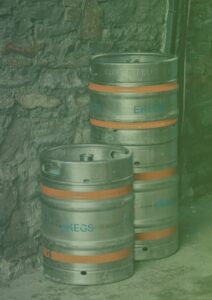
Keg sealing for beer, soft drinks, and wine on tap: one technology, three applications
One of KEGSYL’s key strengths is its versatility. The system works with kegs of any size and type, automatically adapting to the different formats used in the beverage sector. This makes it possible to apply the same technology across a wide range of products, including beer, wine on tap, and soft drinks.
Beer keg sealing
In beer keg sealing, the main priority is protecting the product from contamination that can affect stability, flavour, and shelf life. Beer is particularly sensitive to microbiological variations and external agents.
A sealing process that is not fully controlled can compromise entire production batches.
With KEGSYL , the seal is generated on demand from an aluminium coil and heat-sealed directly onto the keg neck. The result is a uniform, repeatable, and technically reliable sealing process that minimises risks in the final stage of packaging.
Keg sealing for beer, soft drinks, and wine on tap: one technology, three applications
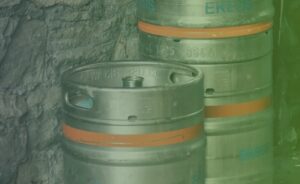
One of KEGSYL’s key strengths is its versatility. The system works with kegs of any size and type, automatically adapting to the different formats used in the beverage sector. This makes it possible to apply the same technology across a wide range of products, including beer, wine on tap, and soft drinks.
Beer keg sealing
In beer keg sealing, the main priority is protecting the product from contamination that can affect stability, flavour, and shelf life. Beer is particularly sensitive to microbiological variations and external agents.
A sealing process that is not fully controlled can compromise entire production batches.
With KEGSYL , the seal is generated on demand from an aluminium coil and heat-sealed directly onto the keg neck. The result is a uniform, repeatable, and technically reliable sealing process that minimises risks in the final stage of packaging.
Wine-on-tap keg sealing
For wine-on-tap kegs, precision is even more critical. Wine is extremely sensitive to oxygen and external agents, and even minimal exposure can alter its organoleptic properties.
The heat-sealing of aluminium foil ensures a consistent and effective barrier. In addition, the fully automatic process reduces human contact, further increasing the hygienic standard of the sealing operation.
This makes KEGSYL particularly suitable for wineries aiming to bring wine-on-tap production to a high industrial standard.
Soft drink keg sealing
In soft drink keg sealing, additional factors such as internal pressure and product stability must be considered. The seal must be uniform and reliable to ensure safety during transport and handling.
Here too, KEGSYL offers a clear advantage: heat sealing creates a stable and consistent seal, identical from one keg to the next, allowing large volumes to be managed while maintaining constant quality standards.
The ability to use a single system across different applications represents a significant advantage for beverage producers. It enables process standardisation, simplifies plant design, and reduces operational complexity.
Wine-on-tap keg sealing
For wine-on-tap kegs, precision is even more critical. Wine is extremely sensitive to oxygen and external agents, and even minimal exposure can alter its organoleptic properties.
The heat-sealing of aluminium foil ensures a consistent and effective barrier. In addition, the fully automatic process reduces human contact, further increasing the hygienic standard of the sealing operation.
This makes KEGSYL particularly suitable for wineries aiming to bring wine-on-tap production to a high industrial standard.
Soft drink keg sealing
In soft drink keg sealing, additional factors such as internal pressure and product stability must be considered. The seal must be uniform and reliable to ensure safety during transport and handling.
Here too, KEGSYL offers a clear advantage: heat sealing creates a stable and consistent seal, identical from one keg to the next, allowing large volumes to be managed while maintaining constant quality standards.
The ability to use a single system across different applications represents a significant advantage for beverage producers. It enables process standardisation, simplifies plant design, and reduces operational complexity.
When keg sealing becomes a competitive advantage for the beverage industry
Today, keg sealing is no longer just a technical necessity, but can become a true competitive advantage.
A keg sealed using an automatic, hygienic system based on sustainable materials communicates a high level of process control and industrial quality. Replacing plastic caps with aluminium foil also improves a company’s environmental profile. Aluminium is fully recyclable and already part of well-established recovery systems. This makes it possible to combine hygiene and sustainability within a single technological solution.
Moreover, because KEGSYL operates directly from a coil and generates the seal on demand, there is no need to manage pre-formed components. There are no caps to store, inspect, or replace depending on keg format.
The result is a more streamlined, organised, and controllable production process.
From a production standpoint, automated keg sealing:
- reduces dependence on manual labour,
- makes cycle times more predictable,
- lowers the risk of errors,
- improves overall process quality.
This transforms a critical stage into a strength. Sealing is no longer a potential risk, but a guarantee of quality and reliability.
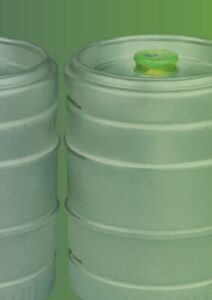
When keg sealing becomes a competitive advantage for the beverage industry
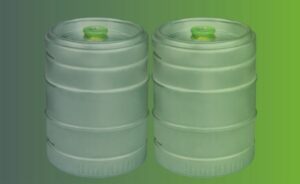
Today, keg sealing is no longer just a technical necessity, but can become a true competitive advantage.
A keg sealed using an automatic, hygienic system based on sustainable materials communicates a high level of process control and industrial quality. Replacing plastic caps with aluminium foil also improves a company’s environmental profile. Aluminium is fully recyclable and already part of well-established recovery systems. This makes it possible to combine hygiene and sustainability within a single technological solution.
Moreover, because KEGSYL operates directly from a coil and generates the seal on demand, there is no need to manage pre-formed components. There are no caps to store, inspect, or replace depending on keg format.
The result is a more streamlined, organised, and controllable production process.
From a production standpoint, automated keg sealing:
- reduces dependence on manual labour,
- makes cycle times more predictable,
- lowers the risk of errors,
- improves overall process quality.
This transforms a critical stage into a strength. Sealing is no longer a potential risk, but a guarantee of quality and reliability.
KEGSYL: the hygienic and sustainable solution for sealing beer, wine, and soft drink kegs
KEGSYL is not simply an industrial keg sealing machine, but a complete sealing system designed to bring high industrial standards to one of the most delicate stages of beverage packaging.
Its use results in a sealing process that is:
- more hygienic,
- more controlled,
- more stable over time,
- fully aligned with a modern industrial approach.
This demonstrates how keg sealing can evolve into a true quality standard.
By combining contamination prevention, environmental sustainability, and automation within a single technology, KEGSYL transforms a critical phase of the process into a concrete competitive advantage for the entire company.