Preventing Contamination in Wine and Beer Kegs: Common Mistakes and How to Avoid Them
How to Ensure Hygiene and Safety During Beverage Sealing and Packaging
How to Ensure Hygiene and Safety During Beverage Sealing and Packaging
The quality of wine and beer does not depend solely on raw materials and the production process. A crucial aspect, often underestimated, concerns what happens during the final stage: the handling of kegs throughout filling, sealing, and distribution. Today, keg contamination prevention is a key priority for breweries and wineries seeking to protect product quality, food safety, and brand reputation.
During beverage packaging, every stage can become a critical control point. Microorganisms, oxygen, dust, or accidental contact can compromise entire production batches, leading to product returns, customer complaints, and significant costs. For this reason, adopting the right procedures and technologies has become essential for companies operating in the beverage industry.
Let us explore the most common mistakes and the best practices for preventing keg contamination, together with the most effective technological solutions for improving hygiene, efficiency, and safety.
Why Keg Contamination Is a Real Risk
In the beverage industry, product contamination can occur at any stage of production, but keg filling and sealing are among the most critical phases. Even in controlled environments, exposing the keg neck before sealing can introduce invisible contaminants.
The main sources of contamination include:
- airborne microorganisms
- accidental contact during handling
- detergent residues or non-sterile water
- unwanted oxygen exposure
For breweries and wineries, ensuring the food safety of beer and wine-on-tap kegs is not merely a regulatory requirement—it is also a competitive advantage. Off-flavours, changes in organoleptic properties, or microbiological issues can compromise months of work.
This is why an increasing number of companies are investing in keg hygiene systems and quality control procedures throughout the entire packaging line.
The Most Common Mistakes in Keg Sealing
Despite the growing focus on keg sanitisation, several critical issues continue to occur in production facilities.
1. Excessive Time Between Filling and Sealing
One of the most common mistakes is leaving the keg exposed to the surrounding environment after filling. Even a few minutes can increase the risk of microbiological contamination and product oxidation.
Reducing this interval is essential to prevent keg contamination and maintain consistently high quality standards.
2. Using Inadequate Sealing Solutions
Many traditional systems rely on plastic caps that provide only partial protection for the keg neck. This approach does not create an effective barrier against external contaminants, making it more difficult to maintain high hygiene standards throughout the beverage packaging process.
3. Manual and Non-Standardised Processes
Manual operations increase process variability and the risk of accidental contamination. A lack of automation can compromise food safety while also creating operational inefficiencies.
Although these issues are often considered minor, they can have significant economic consequences over the medium and long term.
Safety and hygiene throughout the distribution chain
Despite the growing focus on keg sanitisation, several critical issues continue to occur in production facilities.
1. Excessive Time Between Filling and Sealing
One of the most common mistakes is leaving the keg exposed to the surrounding environment after filling. Even a few minutes can increase the risk of microbiological contamination and product oxidation.
Reducing this interval is essential to prevent keg contamination and maintain consistently high quality standards.
2. Using Inadequate Sealing Solutions
Many traditional systems rely on plastic caps that provide only partial protection for the keg neck. This approach does not create an effective barrier against external contaminants, making it more difficult to maintain high hygiene standards throughout the beverage packaging process.
3. Manual and Non-Standardised Processes
Manual operations increase process variability and the risk of accidental contamination. A lack of automation can compromise food safety while also creating operational inefficiencies.
Although these issues are often considered minor, they can have significant economic consequences over the medium and long term.
Best Practices for Safe and Hygienic Beverage Packaging
IReducing the risk of contamination requires an integrated approach that combines effective procedures, staff training, and the right technologies.
Minimise Keg Exposure to the Environment
One of the fundamental rules is to minimise the time between filling and sealing. Automating the keg sealing process significantly reduces exposure to air and improves product protection.
Standardise Operating Procedures
Clear, repeatable procedures improve beverage packaging quality and reduce human error. Automation makes it possible to achieve consistent, measurable, and verifiable results.
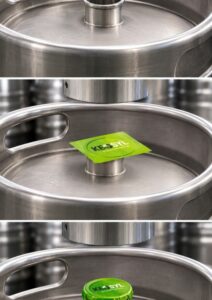
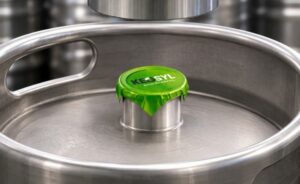
Integrate Keg Neck Protection Systems
Protecting the keg connection point is essential to ensure hygiene throughout the entire distribution chain. An effective physical barrier reduces the risk of contamination during transport, storage, and use.
These best practices not only improve product quality but also strengthen the brand’s reputation as a reliable manufacturer committed to safety.
Best Practices for Safe and Hygienic Beverage Packaging
IReducing the risk of contamination requires an integrated approach that combines effective procedures, staff training, and the right technologies.
Minimise Keg Exposure to the Environment
One of the fundamental rules is to minimise the time between filling and sealing. Automating the keg sealing process significantly reduces exposure to air and improves product protection.
Standardise Operating Procedures
Clear, repeatable procedures improve beverage packaging quality and reduce human error. Automation makes it possible to achieve consistent, measurable, and verifiable results.
Integrate Keg Neck Protection Systems
Protecting the keg connection point is essential to ensure hygiene throughout the entire distribution chain. An effective physical barrier reduces the risk of contamination during transport, storage, and use.
These best practices not only improve product quality but also strengthen the brand’s reputation as a reliable manufacturer committed to safety.
The Role of Automated Keg Sealing Technologies
Technological innovation has introduced new solutions designed to improve automated keg sealing while reducing microbiological risks.
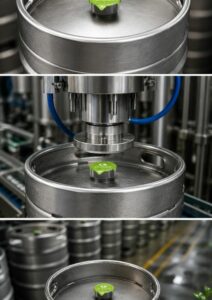
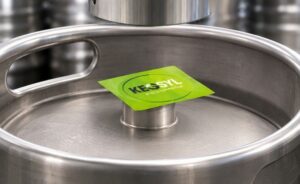
Among these, the KEGSYL aluminium sealing system represents a major step forward. The patented Ecocap’s seal creates a complete barrier against external contaminants, providing greater protection than traditional sealing solutions.
Automating the process through the Ecocap’s automatic keg sealing machine offers several important advantages:
- reduced human contact with the keg
- faster and more repeatable sealing operations
- improved hygiene during the keg filling process
- reduced risk of contamination during transport and storage
As a result, the overall efficiency of the production line is significantly improved.
For breweries and wineries focused on quality, these technologies represent a strategic investment in beverage contamination prevention and packaging optimisation.
New Standards of Hygiene and Safety with KEGSYL
The evolution of the beverage industry requires increasingly reliable solutions for keg sealing and product protection throughout the entire supply chain.
In this context, KEGSYL introduces an innovative approach based on an automatically applied recyclable aluminium seal. This technology creates a complete hygienic barrier around the keg neck, significantly reducing the risk of contamination during transport, storage, and use.
Integration with dedicated machinery enables the entire sealing process to be automated, improving beverage food safety, operational efficiency, and packaging sustainability.
For breweries and wineries looking to raise their quality standards, KEGSYL provides a practical solution for transforming keg contamination prevention into a genuine competitive advantage.